T-Rex Successful, Slightly Famous, Autistic Adult

Open Source Assistive Devices and Possibly Inspirational Stories.

Open source, every line of code

Assistive Devices

AAC communication devices, assistive switches, and sensory tools — adapted to each user’s abilities. Buttons, touch screens, sip-and-puff, and soon eye tracking. The same V3 core runs all of them; the hardware reshapes around the person.

Expanding accessibility, one individual at a time.

The mission is to expand accessibility, collaborate with like-minded innovators, and grow open-source resources for special-needs technology. Whether you’re a potential collaborator, someone seeking support, or just curious — stop by to learn, connect, and explore how we can build solutions together.

AAC family

T-Rex Talker V3 — communication devices

Picture-based AAC. Touch a picture, the device speaks the word or phrase out loud. No programming needed — teachers and parents customize by editing plain text files on the device’s SD card. The same V3 core runs all four variants below.
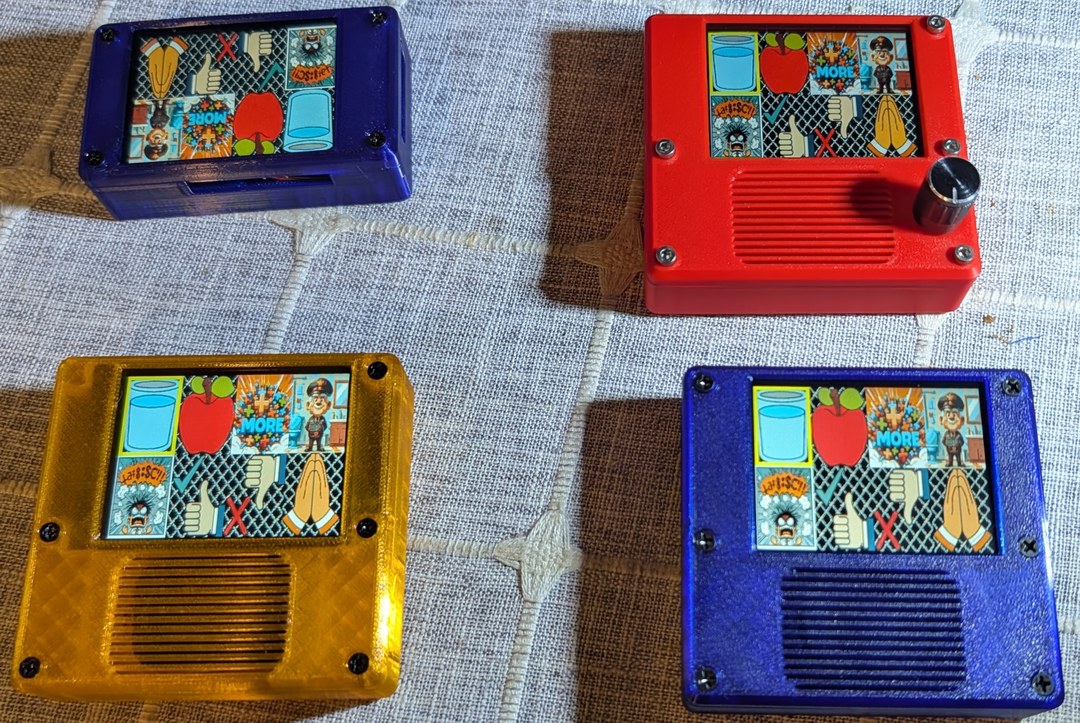
Four finished T-Rex Talk Build-a-Box devices in colored 3D-printed cases
Primary AAC · CYD_PLUS

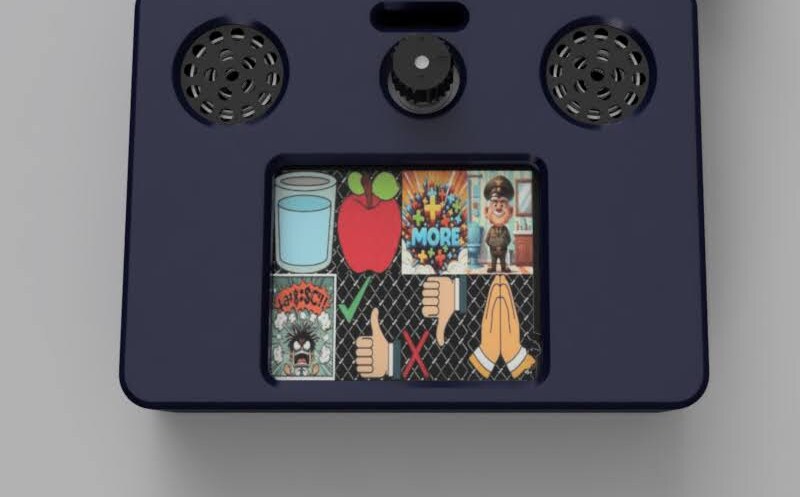
T-Rex Talker V3 — touch

The flagship. 320×240 color touch screen, full menu system, emergency hold-to-call, multi-language support, configurable playback speed for pre-verbal learners. The device shown is one of four printable Build-a-Box variants.

Hardware: CYD_PLUS · ESP32 + 2.8″ touch LCD
Input: touch screen
Best for: primary AAC use
GitHub → Build-a-Box guide →

T-Rex Talker V3 with physical buttons and rotary encoder
Button · Feather RP2350

T-Rex Talker V3 — 4+1 button + rotary

Physical-button variant for users who need tactile feedback or can’t use a touch screen. Eight physical buttons plus a rotary encoder, with the same color LCD and menu system as the touch variant. Build guide coming soon.

Hardware: Feather RP2350 · 320×240 color LCD
Input: 8 buttons + encoder
Best for: physical button access, low vision
GitHub →

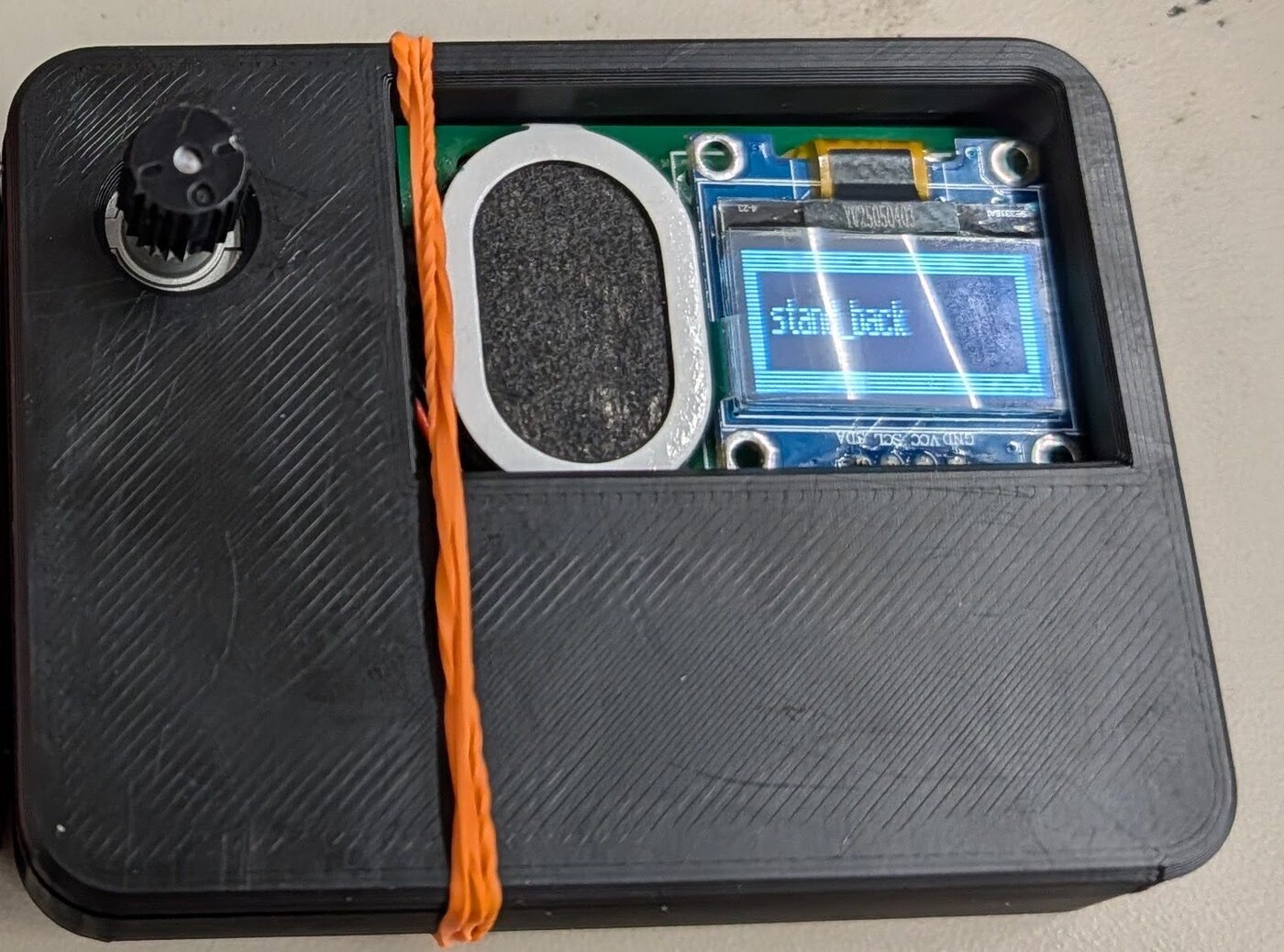
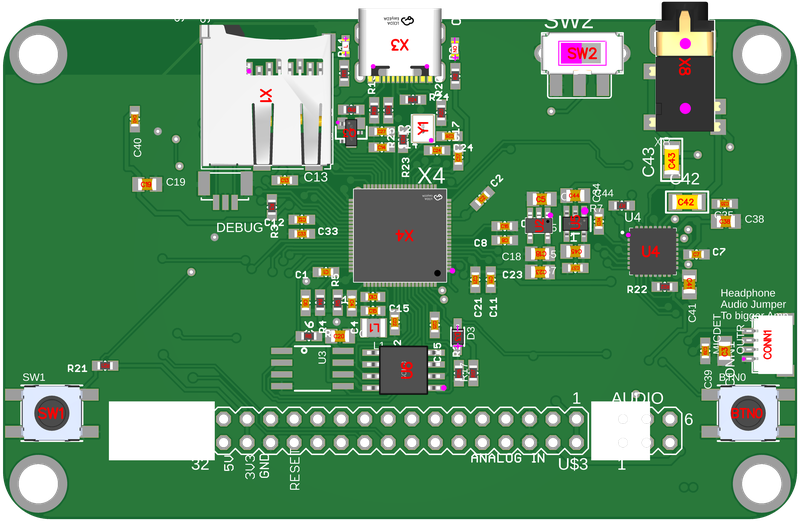
Compact T-Rex Talker prototype
Compact · Fruit Jam

T-Rex Talker V3 — compact

Pocket-size compact variant with a 160×128 color LCD and a rotary encoder. Designed for low-power use and people who want a smaller, lighter device they can take everywhere.

Hardware: Fruit Jam · 160×128 color LCD
Input: rotary encoder
Best for: compact, low-power use
GitHub →

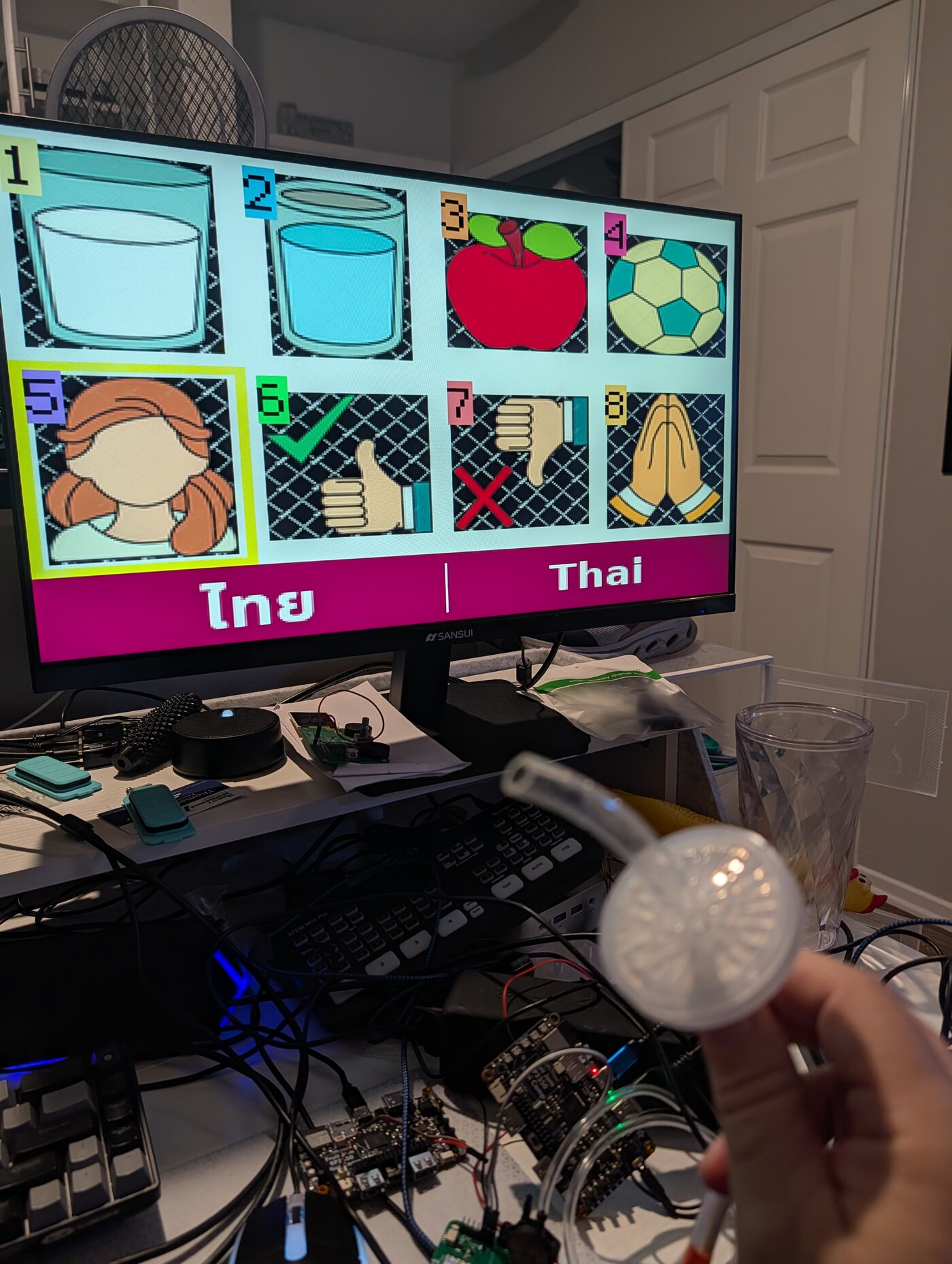
OLED Badge processor board
Wearable · OLED Badge

T-Rex Talker V3 — OLED badge

Wearable text-only variant for short phrases or pre-defined messages. Slim 128×32 mono OLED you can hang around your neck or pin to a backpack — the V3 core in its smallest form.

Hardware: custom processor board · 128×32 mono OLED
Input: rotary encoder
Best for: wearable, text-only use
GitHub →

Switches & input

Assistive switches

Alternate input devices for users who can’t use a touch screen or buttons. The Sip-N-Puff is the first; eye tracking is on the roadmap.

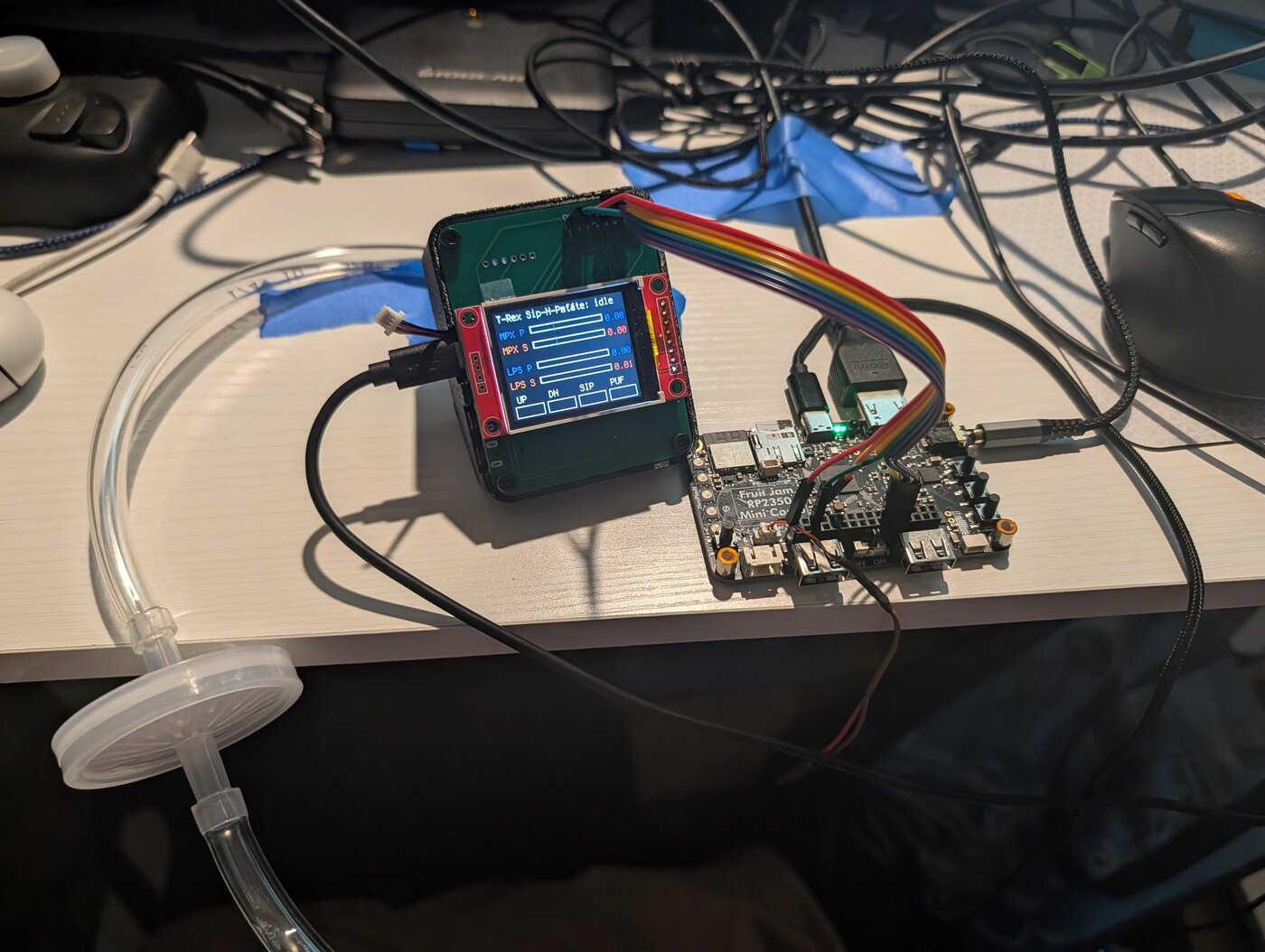
Sip-and-Puff driving a T-Rex Talker V3
Working alpha/beta

Sip-N-Puff V1.2

Open-source sip-and-puff assistive switch with a built-in 9-axis IMU. One hardware build, many uses — reconfigure for USB mouse, two-switch keyboard, Xbox Adaptive Controller input, or AAC device driver by editing a plain text file on the device’s USB drive. No reflashing, no IDE.

Hardware: Pico W · 9-axis IMU · opto-isolated sip/puff sensors
Use: USB HID, AAC switch, gaming input
Status: alpha/beta, driving the V3 Talker

Read more → GitHub →

Sip-and-Puff alpha/beta prototype with pressure sensor HUD
On the roadmap

Eye tracking

Eye-tracking input for users with very limited motor control. The same V3 core, the same menu system — just a different way to select. Early prototyping; no release date yet.

Status: research / early prototyping

Talk to us →

Sensory & stim

Autism Stim Device

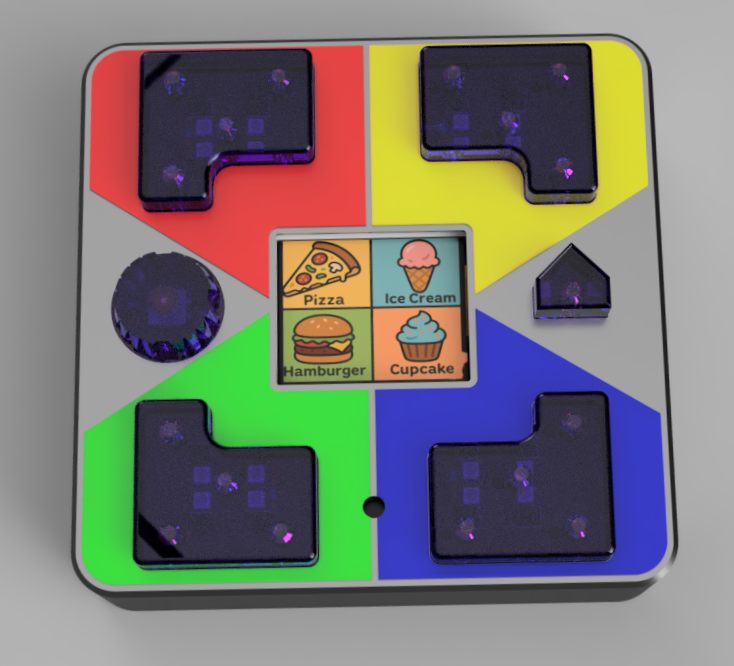
Autistic-stim variation of the V3 hardware — four large stim pads around a small color screen. Educational toy first, AAC tool second, and a budget for the larger project: every dollar the stim devices raise helps fund building communication devices for people who can’t ask for one.

Autism Stim Device V3 rendering
Charity build · 30-50 units

Building 30-50 with American Legion Post 468

Hardware is laid out, plastics are designed, PCBs are on the way. A Build A Stim Device instruction set is coming so anyone can put one together for someone who needs one. The Legion handles sponsorship paperwork; every dollar lands on parts.

See the project → Sponsor a device →

In development

What’s on the bench right now

Production prototypes ordered as of June 2026. As soon as the boards arrive we’ll start populating, testing, and shipping units into the MVP test groups.

Boards ordered

V3 Stim main board

Large stim-pad PCB for the Autism Stim variation.

Boards ordered

Processor board

Shared V3 brain — stacks with the Nonverbal daughter.

Boards ordered

Involuntary Nonverbal daughter

Stacks under the processor board for the Nonverbal variant.

Boards ordered

Sip-N-Puff V1.2

Next revision of the open-source sip-and-puff switch.

Boards ordered

SEESAW daughter

Shared button-matrix daughterboard used across the V3 family.

Prototype

MacD — minimum full AAC device

80×80 mm square, large 12 mm buttons, compact mono screen, audio amp, Pico 2. Working prototypes are running and they shaped the V3 hardware.

See the boards in detail →

Four finished Build-a-Box devices
Build it yourself

Build-a-Box — 3D-printable cases & assembly

A decent step-by-step build guide is ready right now — full assembly photos on Google Photos. Build guides for the MVP and the 4+1 button + rotary encoder V3 box are coming soon.

Build-a-Box photo guide → NeedsBoard repo →

HandtoHand Pattaya

Shout out to HandtoHand Pattaya for doing wonderful work and getting me motivated to start building special-needs devices now, instead of waiting.

Need a device? Want to build one?

Every device, every line of code, every hardware file is public on GitHub. If you can use a device, build one, fund one, or just want to talk — reach out.

Get in touch →